When toddlers hit, bite or throw: how to respond
Toddler hitting, biting, and throwing are common impulse-control struggles, not parenting failures. Learn why they happen and how to respond calmly.
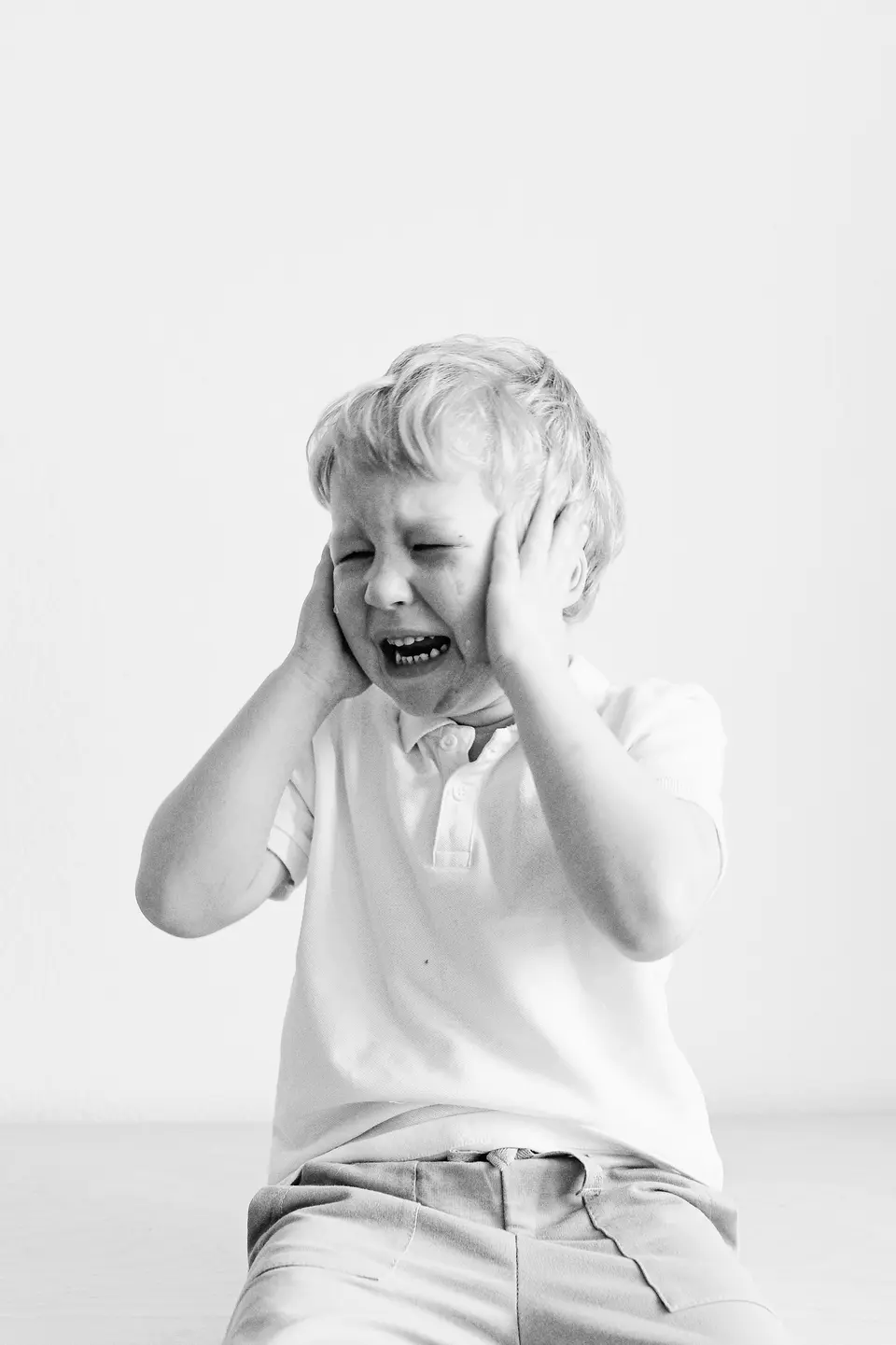
In short
Hitting, biting, and throwing are common in toddlers. They haven't yet learned self-control (managing big feelings calmly). It isn't bad parenting or a bad kid. Toddlers need to be taught, again and again, to use words instead of hitting or biting when they're angry. Call your pediatrician if your child seems unusually aggressive for more than a few weeks. Also call if they hurt themselves or others, hit adults, or get sent home for it. How often it happens matters most.
Sourced from HealthyChildren.org (AAP) · Updated August 15, 2026
Has your toddler hit a sibling, bitten a friend at the playground, or thrown a toy across the room in a rage? You are not raising a bad kid. You have not failed as a parent. The American Academy of Pediatrics says toddlers and preschoolers often just lack the self-control (the ability to manage big feelings calmly) to show anger peacefully. Hitting and biting when frustrated is a normal part of this stage — not a character flaw, and not a discipline failure.
That doesn't make it easy to be on the receiving end of a bite mark. It doesn't make the embarrassment sting less when your toddler hits another child in front of other parents. This guide explains why these impulse-control struggles happen. It also covers how to respond in the moment — teaching without shaming — and the signs that mean it's time to call your pediatrician.
Why do toddlers hit, bite, and throw things?
It can feel deeply personal when your toddler lashes out. That's especially true if it happens in public, or if it's aimed at you. But the American Academy of Pediatrics is clear: toddlers and preschoolers often lack the self-control (ability to manage big feelings calmly) to express anger peacefully. Hitting or biting out of frustration is a natural part of this stage.
Think of it this way: your toddler feels enormous emotions, but their brain and vocabulary are still under construction. The feeling arrives first — fast and overwhelming. The tools to manage it, or put it into words, haven't caught up yet. Hitting, biting, and throwing are often just the fastest outlet a toddler has for frustration. It's not a calculated choice to hurt someone.
Calling this developmental, not defiant, doesn't mean you should ignore it. It means your response can start with teaching instead of punishment.
What's happening right before it happens?
When a toddler hits, bites, or throws, it's rarely random. Something usually came before it — a toy taken away, a transition they didn't want, a request that got a 'no,' plain exhaustion, or small frustrations that built up and spilled over. The behavior is just the visible tip of a feeling the child doesn't have words for yet.
This is also why lectures in the moment often don't land. A toddler mid-meltdown can't reason through cause and effect or follow a long explanation. Their logical thinking shuts down while the big feeling takes over. That's not defiance — it's just where their brain development is right now.
How do I respond without shaming my child?
In the moment, your goal is to stop the behavior firmly while keeping your child's sense of self intact. Separate the child from the act. Your toddler is not 'bad' or 'a biter' — they did something that isn't okay, and you're going to help them stop.
A simple, calm script carries a lot of weight. Get to your child's level. State the limit plainly ('I won't let you hit your sister'). Then name the feeling underneath it ('You're really frustrated'). Shaming language — 'bad boy,' 'why are you always like this,' comparing them to other kids — targets who they are, not what they did. It doesn't teach the skill you want to build. A firm, matter-of-fact limit teaches far more than an angry or humiliating reaction, even when your patience is worn thin.
If your child is mid-throw or mid-hit, it's fine to step in physically to stop it — block the hit, or move a sibling out of reach. That's boundary-setting, not shaming, as long as you stay calm rather than punishing.
How do I teach my toddler to use words instead?
The AAP's guidance is specific: children need to be taught not to kick, hit, or bite when angry, and to use words instead. That word 'taught' matters. This isn't a skill toddlers are born with. It has to be modeled and practiced over and over — often long after you feel like you've explained it a hundred times.
In practice, this might mean giving your toddler simple words for big feelings — 'mad,' 'frustrated,' 'no' — before the next flashpoint, not just during it. It might mean saying your own feelings out loud ('I'm frustrated the traffic is slow, so I'm taking a deep breath'). That shows your child that words are the default tool. Using the same calm limit every time is what eventually turns 'I was taught this' into 'I remember this myself.'
Progress here is rarely a straight line. A toddler who used words successfully yesterday may hit again today if they're tired or overstimulated. That's not real backsliding — it's a skill still under construction, wobbling the way any new skill does.
When should I call the pediatrician?
Most hitting, biting, and throwing in the toddler years is typical development. It responds, gradually, to consistent teaching. But the AAP lists specific signs that mean it's time to bring in your pediatrician instead of managing it alone.
Reach out if your child seems unusually aggressive for more than a few weeks and you can't cope with it alone. Other signs worth flagging: physical injury to your child or others, attacks aimed at adults, or your child being sent home or barred from play because of the behavior. Of all these signs, how often the outbursts happen matters most. A pattern that keeps happening or getting worse is different from an occasional hard moment.
Bringing this to your pediatrician isn't admitting failure. It's the same kind of step as asking a feeding or sleep question — a normal part of partnering with a professional as your child grows.
You're not failing — a note for tired parents
If you're reading this after a hard bite mark, a hit in front of other parents, or a thrown toy, here's the plain truth: this phase is genuinely hard to live through. It is not proof that you're failing. Impulse control is a skill your toddler is still building. Your calm, consistent response — even when it doesn't feel calm inside — is the teaching itself.
Give yourself the same grace you're trying to give your toddler. Responding without shame doesn't mean responding without limits. And it doesn't mean you'll get it right every single time. It means your response says 'I'm helping you learn this,' not 'something is wrong with you.' Your toddler will absorb that distinction, even before they can say it back in words.
Frequently asked questions
Is it normal for my toddler to hit, bite, or throw things?
Yes. According to the American Academy of Pediatrics, toddlers and preschoolers often lack the self-control to express anger peacefully, and it's developmentally common for them to lash out by hitting or biting when they're frustrated. This isn't a sign that something is wrong with your child or that you're doing something wrong as a parent — it's a skill they haven't built yet.
How do I discipline my toddler for hitting without shaming them?
Shame targets who a child is; discipline targets what they did. You can firmly stop the behavior and name it as not okay — 'I won't let you hit, hitting hurts' — while still communicating that you love and accept your child. The AAP frames this as teaching: toddlers need to be taught not to kick, hit, or bite when angry, and to express their feelings through words instead. That teaching happens through calm, repeated limits, not through labeling your child as bad, mean, or a 'biter.'
When does toddler hitting or biting stop being 'normal' and become something to worry about?
The American Academy of Pediatrics advises consulting your pediatrician if your child seems unusually aggressive for longer than a few weeks and you can't cope with the behavior on your own. Other warning signs include physical injury to your child or others, attacks on adults, or being sent home or barred from play. Frequency of outbursts is described as the most important warning sign to pay attention to — so a single hard week is very different from a pattern that keeps escalating over time.
What should I say instead of just 'no hitting'?
A flat 'no' names the rule but not the feeling underneath it. Try naming the emotion first ('You're really mad right now') and then pairing it with the limit and the words you want them to use instead ('I won't let you hit — you can say I'm mad, or stomp your feet'). This lines up with the guidance to actively teach toddlers to express feelings through words rather than assuming they'll figure it out on their own.
Will my toddler grow out of hitting and biting on their own?
Impulse control in toddlers is a skill that develops with teaching, modeling, and lots of repetition — not something most children simply outgrow overnight without guidance. Consistent, calm responses from caregivers are part of how that skill gets built. If the behavior isn't shifting at all over an extended period, or it comes with any of the warning signs above, that's the point to loop in your pediatrician rather than wait it out indefinitely.
Sources
- Toddlers and preschoolers often lack the self-control to express anger peacefully and may naturally lash out by hitting or biting in frustration; children need to be taught not to kick, hit, or bite when angry and instead express feelings through words. — HealthyChildren.org (AAP)
- Parents should consult their pediatrician if a child seems unusually aggressive for longer than a few weeks and the parent cannot cope with the behavior alone; other warning signs include physical injury to the child or others, attacks on adults, and being sent home or barred from play, with frequency of outbursts being the most important warning sign. — HealthyChildren.org (AAP)
Educational information, not medical advice — always consult your doctor.