Low iron in toddlers who drink a lot of milk
Toddler drinking mostly milk? Learn how milk-heavy diets lead to low iron, the signs to watch for, when screening happens, and when to call the pediatrician.
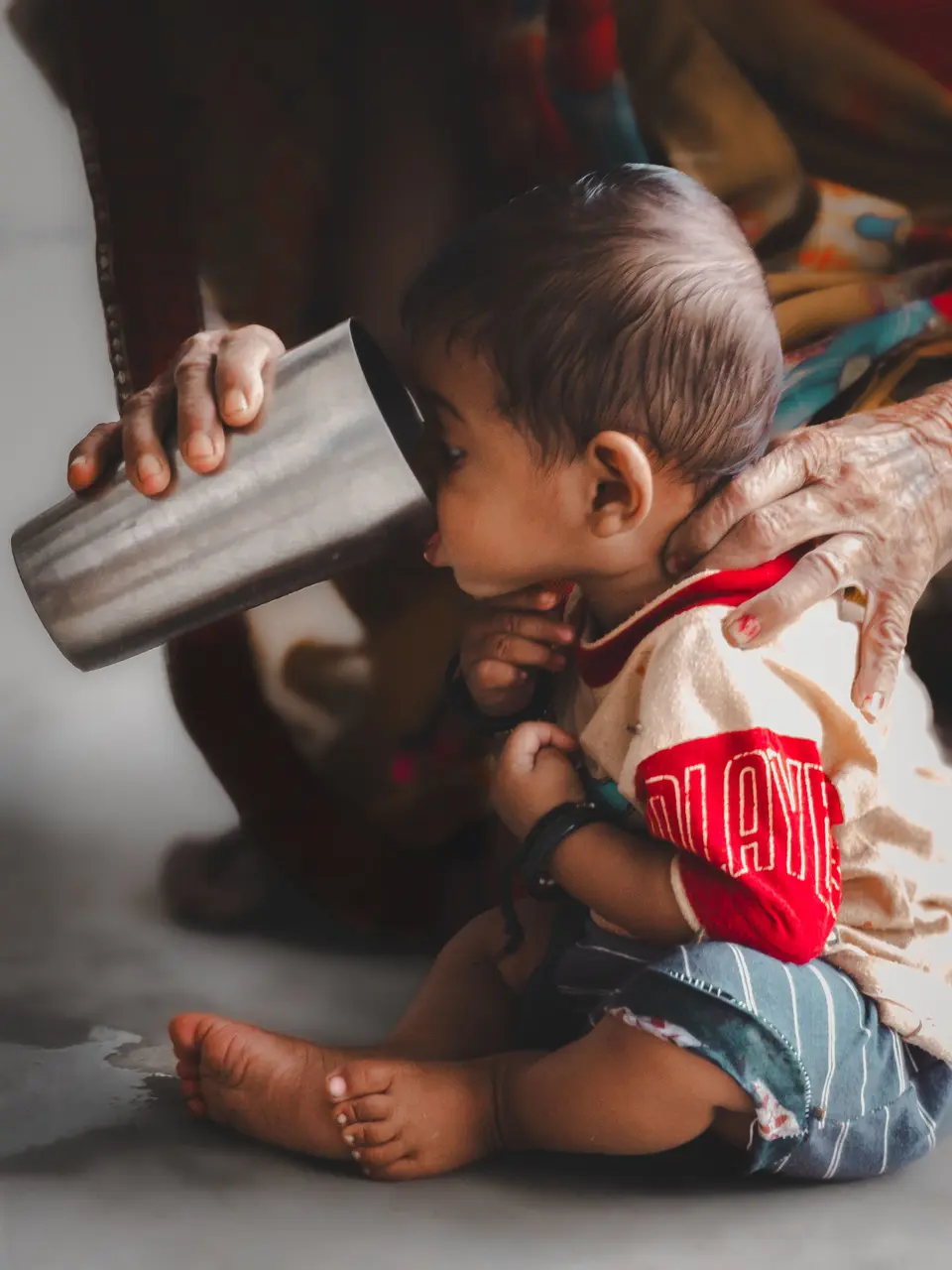
In short
Milk is low in iron. A toddler who drinks a lot of it can fill up before eating iron-rich foods. This can lead to low iron. Watch for pale or ashy skin, or faded color in the cheeks and lips. Also watch for your toddler chewing on ice or non-food items (a sign called pica). It's worth checking in with your pediatrician about screening or these signs. Untreated low iron can affect your child's development.
Sourced from AAP / HealthyChildren.org, NCBI StatPearls, Ellyn Satter Institute · Updated August 15, 2026
If your toddler would happily live on milk and little else, you are not alone. Somewhere between the first and third birthday, a lot of toddlers develop a fierce preference for the bottle or sippy cup over the plate. Milk is comforting, familiar, and easy to gulp down between all the business of exploring the world. It's a normal stage, not a parenting failure.
But milk is low in iron. A toddler who is very full from milk has little appetite left for the iron-rich foods that matter for their growing brain and body. That's why milk-heavy diets are a well-known setup for low iron. The good news: the warning signs are learnable, and the screening timeline is well established. None of this requires panic — just attention, and a conversation with your pediatrician when something looks off.
Why does drinking a lot of milk cause low iron?
Here's the simple mechanism. Milk itself is low in iron. That's not a problem by itself. Plenty of foods are low in iron, and the rest of the diet usually fills the gap. The issue is that milk is also filling. A toddler who drinks a lot of it during the day, or right before meals, often has little appetite left for the iron-rich foods on their plate.
So it's less "milk is dangerous (harmful)" and more "milk is taking up the space where iron-rich food would otherwise go." That's good news, because it points to a solvable fix, not a scary diagnosis. Shift when and how much milk shows up in the day, so there's room for other foods too.
When should my toddler be screened for low iron?
There's an established timeline for iron screening, and it depends on what your baby mostly drank as an infant. For babies who were mostly breastfed, screening is generally recommended starting around 9 to 12 months. For babies who mostly had infant formula, it's generally recommended starting around 15 to 18 months.
If your toddler is in a milk-heavy pattern now, ask your pediatrician whether screening has already happened, is coming up, or is worth doing now. This matters especially if you're also noticing any of the signs below.
What physical signs might mean my toddler has low iron?
A few visible signs are worth knowing, even though they can be subtle. Pale, yellowish, or ashy-looking skin is one recognized warning sign. So is faded color in the cheeks, lips, nail beds, and eyelids. These spots usually show a loss of the normal pink or red tone more clearly than skin overall.
These signs are easy to miss in a child you see every day, since gradual changes don't stand out the way a sudden change would. That's why it's worth leaning on your pediatrician's assessment rather than relying only on your own read of your toddler's coloring, especially if screening is due.
Why is my toddler chewing on ice or non-food items?
Two specific behaviors are worth flagging if you notice them: pica (craving and eating non-food items) and pagophagia (craving ice specifically). Both are considered fairly specific signs of iron deficiency. This means they aren't just generic toddler quirks; they show up more often when iron is low. The encouraging part: both tend to resolve quickly once iron supplementation begins.
If your toddler is chewing on non-food items or seems unusually drawn to chewing ice, mention it to your pediatrician directly rather than writing it off as a passing habit.
Why does catching low iron early matter so much?
Here's why this deserves real attention. Chronic iron deficiency in infancy and childhood has been linked to thinking and learning problems (cognitive impairment) and developmental delays. These effects may not fully reverse even after treatment. That's the core reason early screening and early attention to symptoms matter so much.
This isn't meant to worry you if your toddler loves their milk cup a little too much. That describes a huge number of toddlers, most of whom are fine. It's meant to explain why pediatricians take the screening timeline seriously. It's also meant to explain why the signs above are worth bringing up at your next appointment rather than waiting to see if they go away on their own.
How do I offer more iron-rich food without a fight?
Once you know about the milk-and-iron connection, the instinct is often to crack down hard on milk. But a feeding battle tends to backfire, and it isn't necessary. Ellyn Satter's well-known Division of Responsibility framework offers a calmer way to think about it. Your job as the parent is to choose what food is offered, including foods you actually enjoy for family meals and snacks, and to control when and where food happens. Your toddler's job is deciding how much of that food to eat, or whether to eat it at all. This job is not yours.
In practice, that means you can offer iron-rich foods alongside milk without forcing a bite count. You can also manage how milk itself is offered. One concrete step: long-term bottle use is linked to early childhood tooth decay, since teeth are repeatedly bathed in milk, formula, or juice. So bottle weaning is worth having on your radar regardless of the iron question. The general guidance is to start introducing a cup around 6 months and finish moving off the bottle somewhere between 12 and 18 months.
And if your toddler is a picky eater beyond just the milk issue, take a breath: picky eating is considered normal at this age, not a red flag on its own. The AAP's advice for a concerned parent is simple: talk with your pediatrician. They can help make sure your child is getting everything they need to grow and develop, iron included.
Frequently asked questions
Why does drinking a lot of milk put my toddler at risk for low iron?
Milk itself is low in iron, and toddlers who drink a lot of it often fill up before they get to the iron-rich foods on their plate. These include meat, beans, fortified cereals, and similar options. That combination, a low-iron drink taking the place of higher-iron food, is the main mechanism behind milk-related iron deficiency in toddlers, according to the AAP. It's not about milk being 'bad.' It's simply about how much stomach space it takes up.
When should my toddler be screened for iron deficiency?
Pediatric guidance points to screening starting around 9 to 12 months for babies who mostly drink breast milk, and around 15 to 18 months for babies who mostly drink infant formula. If your child is in a milk-heavy stage now, it's worth checking with your pediatrician about whether a screening is due or overdue.
What physical signs might suggest my toddler has low iron?
Watch for pale, yellowish, or ashy-looking skin, and for faded coloring in the cheeks, lips, nail beds, or eyelids. These are recognized visual signs of anemia in children. They can be subtle and easy to miss day-to-day, especially in a child you see constantly. So a pediatrician's assessment is more reliable than a parent's visual read alone.
My toddler chews on ice or wants to eat non-food items — is that related to iron?
It can be. Craving and eating non-food items (pica) and craving ice specifically (pagophagia) are signs considered relatively specific to iron deficiency. They typically resolve quickly once iron supplementation begins. Mention this behavior to your pediatrician rather than assuming it's just a phase. It's worth ruling iron deficiency in or out.
Is it my fault if my toddler ended up low on iron from drinking too much milk?
No. Toddlers gravitating toward milk over other foods is an extremely common stage. Picky eating in general is considered the norm at this age, not a sign of parenting gone wrong. Your job, per feeding frameworks like Ellyn Satter's Division of Responsibility, is to choose what's offered and when and where meals happen. Your toddler's job is deciding how much or whether to eat it. If you're worried, loop in your pediatrician; that's exactly what they're there for.
Sources
- Milk is low in iron and can fill a toddler up, which reduces how much iron-rich food the child ends up eating — a key mechanism behind milk-related iron deficiency. — AAP / HealthyChildren.org
- Pediatric guidance recommends screening for iron deficiency starting around 9 to 12 months for babies who mostly consume breast milk, and around 15 to 18 months for babies who mostly consume infant formula. — AAP / HealthyChildren.org
- One visible warning sign of anemia in a child is pale, yellowish, or ashy skin. — AAP / HealthyChildren.org
- Faded coloring in the cheeks, lips, nail beds, and eyelids is listed among the recognizable signs of anemia in children. — AAP / HealthyChildren.org
- Pica (craving and eating non-food items) and pagophagia (craving ice) are signs that are relatively specific to iron deficiency and typically resolve quickly once iron supplementation begins. — NCBI StatPearls
- Chronic iron deficiency in infancy and childhood is linked to cognitive impairment and developmental delays that may not fully reverse even after treatment, underscoring why catching low iron early matters. — NCBI StatPearls
- In Ellyn Satter's Division of Responsibility framework, the parent's job in feeding is to choose what food is offered ('choose food you enjoy for family meals and snacks'), while a separate principle governs when and where food is offered — the parent controls these logistics, not the child. — Ellyn Satter Institute
- Under the Division of Responsibility, the child — not the parent — is trusted to decide how much to eat of the food offered, and whether or not to eat it at all. — Ellyn Satter Institute
- Prolonged bottle use in toddlers is linked to early childhood tooth decay, because the teeth are repeatedly bathed in milk, formula, juice, or other drinks. — AAP / HealthyChildren.org
- Bottle weaning should ideally begin around 6 months when a cup is first introduced, with the full transition off the bottle completed sometime between 12 and 18 months. — AAP / HealthyChildren.org
- Picky eating is considered the norm for toddlers, and parents concerned about their toddler's diet are advised to talk with their pediatrician, who can help make sure the child is getting all necessary nutrients to grow and develop. — AAP / HealthyChildren.org
Educational information, not medical advice — always consult your doctor.