Handwashing and germs: surviving daycare illnesses
Why handwashing matters so much once daycare starts, how it connects to potty training and bedwetting, and the real red flags to watch for — evidence-based, reassuring guidance.
In short
Handwashing can prevent about 30% of diarrhea-related illness and about 20% of colds. That's why it matters so much once daycare starts. Occasional bedwetting is normal. It usually resolves on its own between ages 4 and 6. It's not something to worry about at the toddler stage. Call your child's doctor if they aren't meeting several communication milestones for their age, like using 50+ words and following two-step directions by 19 to 24 months. Also call if they lose a skill they once had.
Sourced from CDC, AAP / HealthyChildren.org, Cleveland Clinic, ASHA · Updated August 15, 2026
Maybe it feels like your toddler has had a runny nose or a stomach bug on repeat since starting daycare or preschool. You're not imagining it, and you're not doing anything wrong. Group care is full of shared toys, shared surfaces, and small hands that touch everything. That makes it an efficient place for germs to travel. The good news: one of the simplest tools you have — handwashing — is also one of the most effective. Understanding how it works, and where the real red flags are versus a normal rough patch, can make this whole stretch feel far less overwhelming.
This guide covers what handwashing actually does for your toddler's health, how it connects with the other big hygiene milestone of this stage — toilet training — and which signs are worth flagging to your pediatrician versus which ones are just part of growing up.
Why bother fighting over handwashing?
It's easy to feel like reminding a squirmy toddler to wash their hands for the tenth time in a day is a losing battle. But the evidence behind it is strong. The CDC estimates that handwashing can prevent about 30% of diarrhea-related illnesses and about 20% of respiratory infections like colds. Those are exactly the two types of illness that tend to sweep through daycare classrooms. That's not a small effect for something this simple.
This also helps explain why illness spreads through group care so fast. A single gram of human waste — about the weight of a paper clip — can contain one trillion germs, according to the CDC. Toddlers are still learning independent toilet habits. Diaper changes happen constantly at this age. And little hands touch faces, toys, and each other all day long. That combination is exactly why handwashing after diaper changes and bathroom use matters so much for stopping illness from spreading between kids.
Does handwashing really cut down on sick days?
This isn't just theoretical. The CDC notes that schools and daycares that actively promote hand hygiene see less stomach and respiratory illness among the children in their care, plus fewer missed days overall. If your child's daycare or preschool has a visible handwashing routine — after arrival, before meals, after outdoor play, after bathroom trips — that routine is doing real work, even on the days it feels repetitive.
The same logic applies at home. Reinforcing the same handwashing moments your child sees at daycare — instead of treating it as a school-only rule — helps make it a consistent habit, not something that only happens in one place.
How to make handwashing a habit that sticks
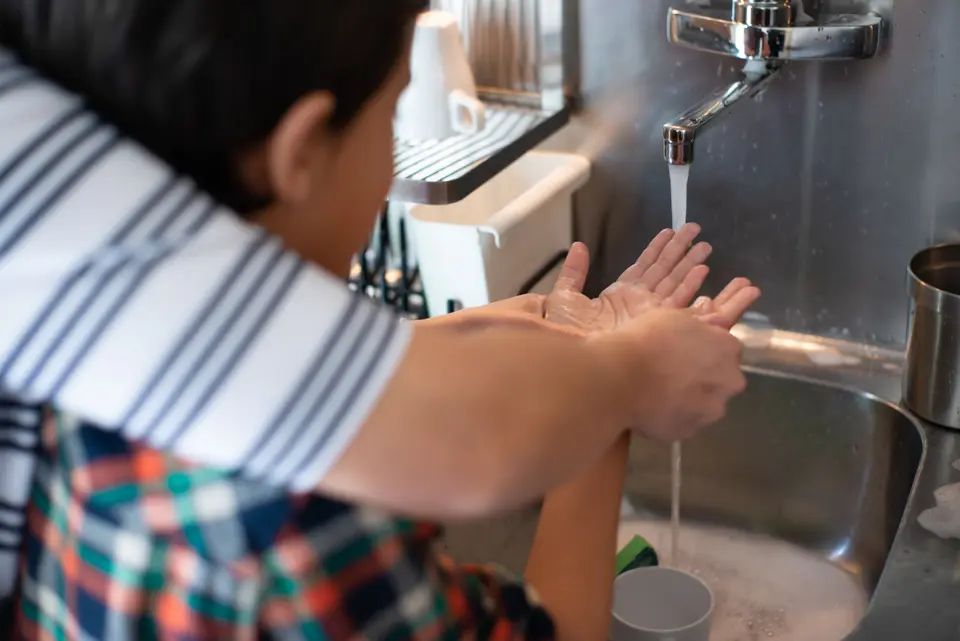
Toddlers thrive on predictable, repeated routines, and handwashing is no exception. Anchor it to the same moments every day — after using the potty or getting a diaper changed, before meals and snacks, after coming inside. This gives your child a consistent cue instead of an abstract rule to remember.
Language development plays a role too. By 19 to 24 months, most toddlers can follow two-step directions. That lines up well with a simple two-step handwashing routine: wet and soap, then rinse and dry. Narrate each step out loud as your child does it, instead of doing it for them. This gives them the repetition they need to eventually manage more of the process on their own.
How handwashing and potty training go together
Handwashing and toilet training tend to arrive in the same general window of toddlerhood, and they support each other well. According to the AAP and HealthyChildren.org, toddlers typically start showing signs of bladder and bowel control between 18 and 24 months. The average age toilet training actually begins in the U.S. is between 2 and 3 years. So there's no need to rush either skill ahead of your child's own readiness.
Instead of watching the calendar, look for the readiness signs the AAP describes: your child staying dry for at least 2 hours at a time during the day or after naps, and showing physical cues like grunting, freezing, or squatting before urinating or having a bowel movement. When those signs show up, that's your natural moment to start adding handwashing into the bathroom routine from day one — building the habit right alongside the skill itself, instead of adding it on later.
Is bedwetting normal at this age?
Between the germs, the accidents, and the general unpredictability of toddlerhood, it's easy to worry that something's wrong when it usually isn't. Occasional bedwetting is a good example. Per the Cleveland Clinic, most children gradually stop wetting the bed on their own as they grow older. This typically resolves between ages 4 and 6. That means a toddler or preschooler who still wets the bed sometimes is well within the range of normal — not a cause for concern.
There's a clear line for when it's worth a conversation with a healthcare provider: when a child is over age 7 and having accidents at least twice a week for three months or more in a row. Below that age and frequency, it's simply part of how bladder control develops over time.
When should you call the pediatrician?
Most of what happens during this stretch — frequent colds, potty training accidents, occasional bedwetting — is expected and resolves on its own with time and a steady routine. But it's still worth knowing what a real warning sign looks like, separate from the day-to-day noise of daycare illness.
On the communication side, ASHA notes that by 19 to 24 months, children typically use and understand at least 50 words, put two or more words together (like "more water" or "go outside"), and follow two-step directions. If your child isn't reaching many of these milestones for their age, ASHA advises talking with your child's doctor. More broadly, the CDC is direct: don't wait if your toddler isn't meeting one or more developmental milestones, or has lost a skill they once had. Bring it up with your child's doctor and ask about a developmental screening. Catching things early is always easier than waiting to see if they resolve on their own.
Frequently asked questions
My toddler just started daycare and gets sick constantly. Is this normal?
Yes — it's one of the most common (and most exhausting) parts of the daycare transition. Toddlers in group care are exposed to far more germs than they were at home, and their immune systems are still building up a library of defenses. The good news is that consistent hand hygiene at daycare and at home is one of the few things known to meaningfully cut down on how often this happens, so it's worth the effort even when it feels like you're washing hands on repeat.
How young can I start teaching my toddler to wash their own hands?
There's no single "right" age in the confirmed guidance here, but toddlers are typically starting to follow two-step directions by 19 to 24 months — which is right around the age when a simple two-step routine like "wet your hands, then rub them together" becomes something they can start to follow along with, even with plenty of adult help.
Is it normal for my toddler to still have bathroom accidents even after starting potty training?
Yes. Toddlers typically show signs of bladder and bowel control between 18 and 24 months, and toilet training in the U.S. typically doesn't even begin until somewhere between 2 and 3 years of age on average. Accidents during that process are expected, not a sign that anything is wrong.
Should I worry about occasional bedwetting in my toddler or preschooler?
Generally, no. Most children gradually stop wetting the bed on their own as they get older, and this typically resolves between 4 and 6 years of age. A healthcare provider would only consider it something to evaluate once a child is over age 7 and having accidents at least twice a week for three months or more — well outside the toddler and preschool years.
What developmental signs, beyond handwashing itself, are worth mentioning to my pediatrician?
By 19 to 24 months, most toddlers are using and understanding at least 50 words, combining two words together (like "more water"), and following two-step directions. If your child isn't meeting several of these milestones, or has lost a skill they once had, don't wait it out — ask your child's doctor about a developmental screening.
Sources
- Handwashing can prevent about 30% of diarrhea-related illnesses and about 20% of respiratory infections such as colds, which is why frequent handwashing matters so much once a toddler starts daycare or preschool. — CDC
- A single gram of human feces (about the weight of a paper clip) can contain one trillion germs, illustrating why handwashing after diaper changes and bathroom use is critical for stopping illness spread among toddlers. — CDC
- School and early care/education programs that promote hand hygiene can result in less gastrointestinal and respiratory illness and fewer missed days, directly supporting the case for consistent handwashing routines at daycare and preschool. — CDC
- Toddlers typically show signs of bladder and bowel control between 18 and 24 months of age, and the average age toilet training begins in the United States is between 2 and 3 years. — AAP / HealthyChildren.org
- Readiness signs for potty training include a child being dry for at least 2 hours at a time during the day or after naps, and showing physical signals like grunting, freezing, or squatting before urinating or having a bowel movement. — AAP / HealthyChildren.org
- Most children gradually stop wetting the bed on their own as they grow older, and this typically resolves between 4 and 6 years of age, so occasional bedwetting in a toddler or preschooler is not itself a medical concern. — Cleveland Clinic
- A healthcare provider considers bedwetting an issue requiring evaluation when a child is over age 7 and has accidents at least twice per week for at least three months in a row. — Cleveland Clinic
- By 19 to 24 months, expected communication milestones include using and understanding at least 50 different words, putting two or more words together (like "more water" or "go outside"), and following two-step directions. — ASHA
- ASHA advises parents to talk with their child's doctor if the child does not reach many of the speech and language milestones expected within their age range, as a signal to seek a professional evaluation. — ASHA
- The CDC advises parents not to wait if a toddler is not meeting one or more developmental milestones or has lost skills they once had, and to talk with the child's doctor and ask about developmental screening. — CDC
Educational information, not medical advice — always consult your doctor.