Toddler teeth: brushing fights, first dentist visit
A calm, evidence-based guide to toddler brushing fights, the right amount of fluoride toothpaste by age, and when to book the first dentist visit.
In short
Brushing battles are very common. A pediatric dentist writing for the AAP says young kids may use the toothbrush to push for control. That's normal, not a sign you're doing it wrong. Use only a rice-grain smear of fluoride toothpaste before age 3, and a pea-sized dab after. Teach spitting instead of rinsing. Book the first dentist visit by your child's first birthday, or within six months of the first tooth. Call sooner if anything about their teeth or gums worries you.
Sourced from AAP / HealthyChildren.org · Updated August 15, 2026
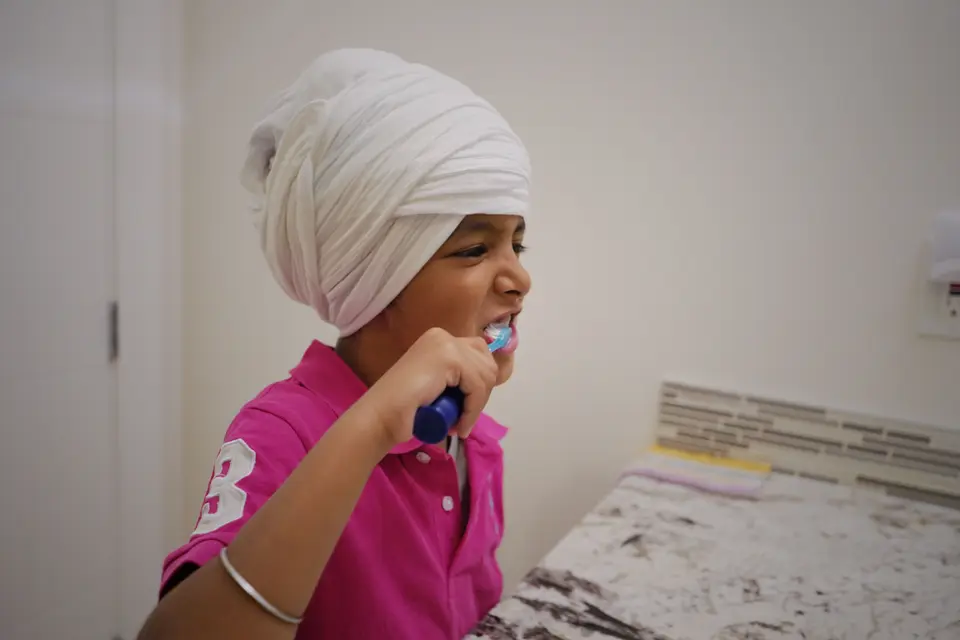
If brushing your toddler's teeth has turned into a nightly wrestling match — clamped lips, turned-away head, a toothbrush treated like an invading force — you are not doing anything wrong, and you are definitely not alone. Brushing used to be something done *to* a compliant infant. Now a strongly opinionated small person has full veto power over it. That shift is normal. It's also exactly why toddler dental care deserves its own conversation, separate from "just brush their teeth" advice aimed at easier ages.
This guide covers the three things most parents actually want clear answers on: how to make brushing less of a fight, how much toothpaste your toddler really needs at this stage, and when to book that first trip to the dentist. The goal isn't a perfect brushing session every night — it's a routine that holds up reasonably well most of the time, with the right basics in place underneath it.
Why does brushing turn into a battle at this age?
Young children are learning how to be independent. A pediatric dentist writing on HealthyChildren.org (the AAP's parenting site) says it is very typical for them to turn brushing into a "test of wills." They may use the toothbrush to flex some muscle about their sense of control. His advice: recognize that this is normal, and set up a routine that happens the same way every day.
That framing matters, because it shifts the goal. You're not trying to win a nightly standoff. You're trying to make brushing feel less like something being done to your toddler and more like something they have a small, real role in. That reframe alone tends to lower the temperature of the whole routine, even before you change any specific technique.
How much toothpaste does my toddler actually need?
One of the most common sources of confusion for parents is how much toothpaste to use, and the answer is smaller than most people assume. For children younger than 3, the AAP recommends only a tiny smear of fluoride toothpaste — about the size of a grain of rice. It isn't until your child turns 3 that the recommended amount increases to a pea-sized dab.
The amount matters because it's a balance: enough fluoride toothpaste to support healthy teeth, without giving more than a young child who's still learning to spit reliably should be swallowing. This is also why the AAP recommends teaching toddlers to spit out toothpaste after brushing instead of rinsing with water. Rinsing washes away fluoride that's meant to keep working on the teeth a little longer. Spitting without a water chaser is a habit worth building early, even if your toddler needs a lot of reminders (and demonstrations from you) before it sticks.
What tricks actually reduce the fight?
Since so much of toddler brushing resistance comes down to wanting control, small choices can go a long way. Let your toddler pick between two toothbrushes, choose who brushes first (them or you), or hold the brush themselves for part of the routine. This hands back some of the control that's driving the pushback in the first place — without you giving up on the brushing actually happening.
Modeling helps too. Brush your own teeth alongside your toddler, in front of them, so it becomes something you're doing together rather than something aimed only at them. The same dentist notes that a child who knows what to expect tends to respond better. The AAP also suggests brushing along to a favorite song, or taking turns and letting them brush your teeth. And it's usually easiest for toddlers to lie down for brushing, on a changing pad or with their head resting in your lap.
None of this guarantees an easy night every night. Toddlers have off days, and some evenings brushing will still be a short, imperfect scramble rather than a calm two minutes. That's completely normal for this age. The goal is a workable routine most days, not a flawless one every day.
When should I book the first dentist visit?
If you haven't scheduled your toddler's first dental visit yet, here's the actual guideline: the AAP recommends children see a dentist by their first birthday, or within six months of their first tooth coming in — whichever comes first. For most families, that means the first dental visit happens well before the toddler years even start.
If your child is already past 12 months and hasn't had that first visit, there's no need to worry — just get it on the calendar. The point of this early visit isn't a deep exam. It's about starting the relationship with a dentist early, so future visits feel familiar rather than new and scary, and so any concerns get caught while they're still small and easy to fix.
Should I call sooner if something worries me?
Scheduled checkups are a floor, not a ceiling. If something about your toddler's teeth, gums, or mouth concerns you at any point — before or between visits — you don't have to wait for the next appointment on the calendar to ask about it. A phone call to your pediatric dentist or pediatrician costs you almost nothing and can either put your mind at ease quickly or get a real concern looked at sooner.
You spend far more time with your toddler day to day than any single appointment captures. That makes your read on "something seems off" worth trusting and worth acting on.
Frequently asked questions
How much toothpaste should I actually put on my toddler's toothbrush?
For children younger than 3, use only a tiny smear of fluoride toothpaste — about the size of a grain of rice, according to the AAP. Once your child turns 3, that amount increases to a pea-sized dab. It's a small enough amount that swallowing a bit here and there during the learning phase isn't something to panic over — just aim to use the right quantity for your child's age going forward.
Should my toddler rinse their mouth with water after brushing?
No — the AAP recommends teaching toddlers to spit out toothpaste rather than rinse with water afterward. Rinsing washes away the fluoride that's meant to stay on the teeth a little longer to do its job. Spitting, without a water rinse, is the habit worth building from the start, even if it takes practice.
When should my toddler have their first dentist visit?
The AAP recommends a first dental visit by your child's first birthday, or within six months of their first tooth coming in — whichever comes first. If your toddler is already past 12 months and hasn't been yet, there's no need to panic; just get it scheduled.
My toddler screams and clamps their mouth shut every time I try to brush. Is that normal?
Yes, this is very common. A pediatric dentist writing for HealthyChildren.org calls brushing battles very typical, a "test of wills" as young children push for control. His advice is to treat it as normal and keep a steady routine: a child who knows what to expect tends to respond better.
What if something about my toddler's teeth or gums worries me before their scheduled dentist visit?
You don't have to wait for the appointment on the calendar. If you notice anything about your toddler's mouth that concerns you — regardless of when their next scheduled visit is — it's reasonable to call your pediatric dentist or pediatrician sooner and ask. You know your child day to day in a way a single appointment can't capture, and a quick call costs nothing.
Sources
- Children should see a dentist by their first birthday or within six months of their first tooth erupting. — AAP / HealthyChildren.org
- For children younger than 3, parents should use only a tiny smear of fluoride toothpaste (about the size of a grain of rice); a pea-sized amount becomes appropriate starting at age 3. — AAP / HealthyChildren.org
- Children should be taught to spit out toothpaste rather than rinse with water after brushing. — AAP / HealthyChildren.org
- Your unwilling preschooler is actually in psychological transition, and it is very typical for her to challenge you to a "test of wills." — AAP / HealthyChildren.org
- Your preschooler may be using the toothbrush as a weapon to flex some muscle about her sense of control. Rather than feeding into the cycle of frustration with morning and/or nightly battles, recognize that this is actually normal and consider establishing a routine that is hardcoded into her schedule. — AAP / HealthyChildren.org
- A child that knows what to expect tends to respond better and may not force their will as much. — AAP / HealthyChildren.org
- It is usually easiest for infants and toddlers to lie down for brushing. Their diaper changing pad can be a good spot, or simply lay them on soft carpet using your lap as a cushion for their head. — AAP / HealthyChildren.org
- Brush along to a favorite song, take turns and have them brush your teeth, or follow a children's brushing app on your phone. — AAP / HealthyChildren.org
Educational information, not medical advice — always consult your doctor.