How toddlers learn to share and play together
Why toddlers play side-by-side before playing together, how sharing skills actually develop, and when peer-play struggles are worth a professional look.
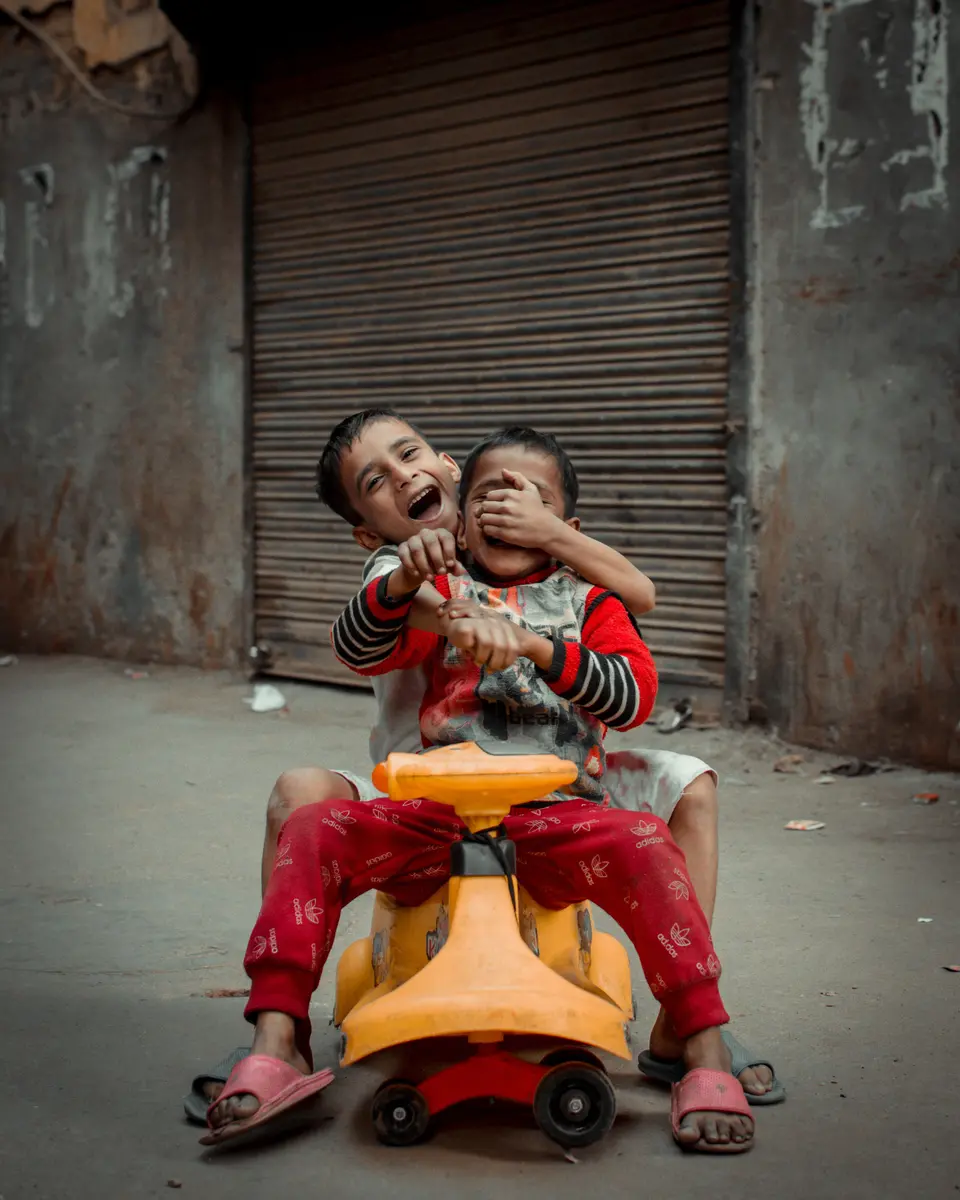
In short
At 2, toddlers often play side by side without really playing together. Around age 3, they start to play with other children, take turns and share. As they grow, helping them find words for what they want can ease the frustration. Is your toddler not meeting many communication milestones for their age? ASHA recommends a speech-language evaluation. Language gaps often show up first as friction during play. A small share of toddlers — about 5% — have sensory processing differences (how the body handles noise, touch, or crowding). This can make group play feel overwhelming. Mention it to your pediatrician if that pattern fits your child.
Sourced from AAP / HealthyChildren.org, ASHA (American Speech-Language-Hearing Association), NCBI/PMC peer-reviewed research · Updated August 15, 2026
Two toddlers sit inches apart, each carefully stacking their own blocks. Neither seems to notice the other's tower rising alongside theirs. A parent watching might wonder: shouldn't they be playing together by now? The answer, almost always, is that they're doing exactly what toddlers are supposed to do at this stage. This side-by-side activity is called parallel play. It isn't a toddler failing to socialize. It's socializing, just in its earliest and most necessary form.
The American Academy of Pediatrics (AAP) describes this shift. At 2, children don't interact well with other kids, even when playing side by side, unless they want a toy. Once they reach age 3, they'll actually play with other children instead of just playing side by side. They learn to take turns and share toys in small groups. But how and when that shift happens varies from child to child. That shift doesn't happen overnight, and it isn't a straight line. It's built through hundreds of small, sometimes messy moments: a grabbed toy, a wordless standoff, a first tentative 'my turn.' This guide walks through what happens as toddlers move from parallel to social play. It also covers how sharing and conflict skills take shape, and the signs that suggest it may be worth bringing in extra support.
What is parallel play, and is it a problem?
Parallel play is exactly what it sounds like. Two or more toddlers are occupied with similar toys or activities, positioned near one another, but not directly interacting. They may glance at each other, copy what the other is doing, or briefly hand over an object. But there's no shared plan, no back-and-forth conversation, no joint goal.
It's tempting for parents to read this as toddlers 'not playing together yet,' as if something is missing. In reality, parallel play is active social learning. A toddler watching a peer stack cups, bang a drum, or push a truck is absorbing a lot. That includes how another child moves, what noises and expressions mean, and what happens when someone else's tower falls. They're building comfort with being near other children before they're asked to team up with them.
Think of parallel play as a toddler's apprenticeship. It lays the groundwork for skills used later, when toddlers start actually playing together — things like tolerating shared space, noticing another child's actions, and early imitation. The AAP says two-year-olds learn best how to behave around other people by getting plenty of trial runs. From about age 3, children gradually stop competing as much and cooperate more when playing with friends. Exactly when that happens varies from one child, and one personality, to the next.
Frequently asked questions
Is parallel play a sign my toddler is behind socially?
No. Parallel play means playing near other children without directly interacting. The AAP notes that two-year-olds don't interact well with other kids, even when playing side by side. Once they reach age 3, children start to actually play with each other. So playing alongside others is expected at this age, not a delay.
When should I expect my toddler to actually start sharing?
There's no single age that applies to every child. Sharing depends on skills like impulse control and an understanding of turn-taking. Those develop at very different paces. Consistent modeling and simple scripts tend to help more than pressuring a toddler to hand things over immediately.
My toddler grabs, hits, or bites during playdates. Is that normal?
These behaviors are common when a toddler doesn't yet have the words to express frustration or ask for a turn. Staying close during play, naming feelings, and offering simple phrases to use instead of grabbing can help. These behaviors typically ease as communication and self-regulation develop.
How does speech development affect how my toddler plays with others?
Communication is often the bridge from parallel to social play. Words let a toddler negotiate turns and resolve small conflicts instead of grabbing or pushing. If a toddler isn't meeting many of the communication milestones expected for their age, the American Speech-Language-Hearing Association (ASHA) recommends an evaluation with a certified speech-language pathologist. Language gaps often show up first as friction during play.
Could sensory sensitivities be behind my toddler's reluctance to join group play?
For a small number of toddlers, yes. Research indicates about 5% of children under age 3 show sensory processing differences. These are linked to reduced social skills and reduced participation in play activities. If a toddler consistently seems overwhelmed by noisy or crowded play settings, it's worth mentioning to a pediatrician.
Sources
- Once they reach age 3, your child will be much less selfish than they were before. … Now they'll actually play with other children, interacting instead of just playing side by side. — AAP / HealthyChildren.org
- Children this age can seem more concerned about their own needs and act selfishly. They may refuse to share things that interests them, and they do not interact well with other children, even when playing side by side—that is, unless they want a toy or object from a playmate. — AAP / HealthyChildren.org
- As this happens, they'll gradually stop competing as much and cooperate more when playing with friends. Your child will learn to take turns and share toys in small groups. — AAP / HealthyChildren.org
- Say to your child "use your words" to deal with problems instead of acting out. … Help your child with the appropriate words to describe their feelings and desires so that they don't feel frustrated. — AAP / HealthyChildren.org
- Your two-year-old will best learn how to behave around other people by being given plenty of trial runs. — AAP / HealthyChildren.org
- ASHA advises that if a toddler does not meet many of the communication milestones expected for their age range, parents should seek an evaluation from an ASHA-certified speech-language pathologist. — ASHA (American Speech-Language-Hearing Association)
- Research on sensory processing indicates that about 5% of children between 0 and 3 years of age exhibit sensory processing differences, and sensory processing disorders are linked to reduced social skills and reduced participation in play activities. — NCBI/PMC peer-reviewed research
Educational information, not medical advice — always consult your doctor.