Sensory seekers and avoiders: what to know
A warm, evidence-based guide to sensory seekers, avoiders, and overstimulation in toddlers 12-36 months, and when it's worth a specialist's take.
In short
Toddlers vary a lot in how they react to sounds, textures, and movement. Sensory 'seekers' chase more input. Think spinning, crashing, and touching everything. 'Avoiders' pull back from it, like covering their ears or gagging at textures. Most of this is just normal personality and a nervous system still developing, not a disorder. It only becomes a concern when a pattern is intense. It's also a concern if it doesn't ease up, and gets in the way of eating, sleep, or outings. Check in with your pediatrician if a sensory pattern is intense and disruptive. Also check in if your toddler can't use or understand at least 50 words by 19 to 24 months.
Sourced from AAP (HealthyChildren.org), ASHA, StatPearls (NCBI), Cleveland Clinic · Updated August 15, 2026
Toddlerhood is when sensory personalities really start to show themselves. One child crashes into every couch cushion, begs to be spun until dizzy, and touches everything within reach. Another clamps their hands over their ears at a birthday party, gags at the texture of mashed banana, or melts down over a shirt tag. A third seems fine one moment, then without warning is sobbing on the floor of the grocery store. All three are showing the same underlying system at work: sensory processing, the brain's ongoing job of taking in information from the world and the body and deciding how to respond.
None of this automatically means something is wrong. Toddlers cover an enormous range of "typical" in how they take in and react to sensory input. Most of that range is simply personality, temperament, and a nervous system still under construction. This guide walks through what seeking, avoiding, and overstimulation actually look like day to day, where they show up in ordinary toddler routines, and the situations worth flagging to your pediatrician.
What does 'sensory processing' actually mean?
Every moment, your toddler's brain sorts a flood of input. That includes what they see, hear, smell, and taste. It includes what touches their skin, and how their body moves through space. It also includes signals from inside, like hunger or a racing heart. Sensory processing is the brain's job of organizing all that and deciding how big a reaction to have. In young children, this system is still developing. That's part of why toddlers react so strongly to things adults barely notice.
One recognized clinical pattern, called sensory modulation disorder, breaks down into three types, according to StatPearls. 'Overresponsive' means reacting strongly and fast to input. 'Underresponsive' means needing much more input before noticing or reacting. 'Sensory seeking' means actively chasing intense input. Having shades of these patterns is not the same as having a disorder, though. Most toddlers lean one way or another at different times and in different places. It only becomes a clinical concern when a pattern is intense, doesn't let up, and truly gets in the way of daily life.
What does a sensory seeker look like?
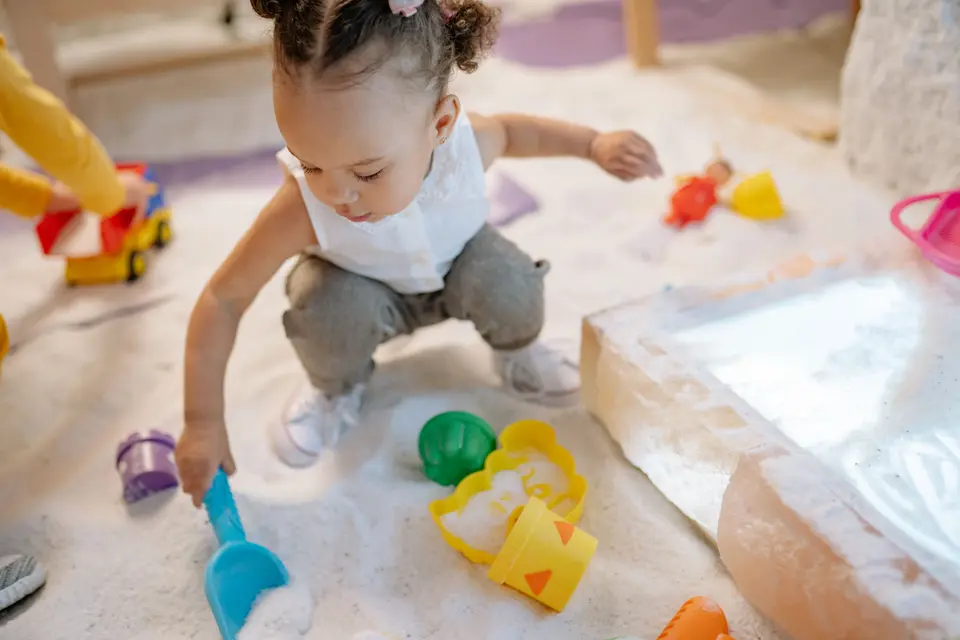
Sensory seekers are toddlers who go looking for more input, not less. Common signs include crashing into furniture, walls, or people, and begging to be swung, spun, or bounced. Seekers also touch everything they pass, and chew on toys, sleeves, or fingers past the usual mouthing age. They may talk or laugh loudly, stand very close to people, and love messy play like sand, water, mud, or paint. Seekers are often the toddlers who seem to always be in motion.
Seeking behavior can also show up in how a toddler plays with other kids. Around age two, most toddlers are still deep in 'parallel play' — playing side by side without much real interaction. The AAP notes that at this age, kids typically don't interact well with other children, even side by side, unless they want a toy the other child has. A toddler with strong seeking tendencies might be the one reaching for a peer's toy or wanting closer physical contact. At age two, that's expected parallel play, not a red flag on its own.
What does a sensory avoider look like?
Sensory avoiders pull back from input that feels like too much. Signs can include getting upset at loud or sudden noises, or covering their ears in ordinary settings. Avoiders may gag at or refuse certain food textures, and melt down over clothing tags or seams. They often avoid messy play, resist unexpected touch or hugs, and struggle through haircuts, nail trims, or tooth brushing.
Oral sensitivities can make routine care genuinely hard for an avoider. Tooth brushing, dental checkups, and even certain foods can all trigger a strong reaction. That first dental visit still matters for every toddler, sensory style or not. The AAP recommends kids see a dentist by their first birthday, or within six months of their first tooth coming in, whichever comes first. If your toddler shows avoider tendencies, keep that visit on the calendar. Just give the dental team a heads-up so they can go slowly.
Why do meltdowns happen when things get overwhelming?
Overstimulation happens when sensory input piles up faster than your toddler's nervous system can sort through it. Think a crowded party, a loud store, or too many transitions in one outing. A meltdown that follows isn't the same as a typical tantrum. It usually isn't goal-directed, and your child often can't be reasoned with in the moment. The priority is helping their body calm down, not negotiating.
Telling overstimulation apart from plain tiredness can be tricky, since the signs overlap. Cleveland Clinic notes that one real sign a toddler is ready to drop a nap is that they seem content and not tired at the usual naptime — not fussy. In other words, fussiness around naptime is more often a sign of overtiredness or sensory overload. It's usually not a sign your toddler has outgrown the nap. Protect that recovery time rather than reading fussiness as readiness to cut sleep.
When overstimulation hits, most toddlers do best with less input, not more. Try a dim, quiet space, a favorite calming object, or firm hugs or pressure if they like that kind of contact. A predictable routine with fewer surprises also helps. Giving a heads-up before transitions can help prevent the pileup in the first place.
How does this connect to toilet training?
Toilet training leans heavily on a sensory skill parents don't always think of as "sensory": noticing and reading signals from inside the body. One readiness sign the AAP points to is a toddler showing they're about to pee or poop through grunting, freezing, or squatting. That's your toddler reading and acting on an internal cue in real time.
The AAP notes that toilet training in the US typically begins somewhere between 2 and 3 years old. That range leaves plenty of room for sensory differences to play out. An underresponsive toddler may need longer to reliably notice the urge. An overresponsive toddler may be startled or upset by a wet or soiled diaper well before they're ready to act on their own. Either way, timing anywhere in that window is normal.
Nighttime dryness lags behind daytime control for a lot of toddlers, sensory differences or not. Nighttime bedwetting isn't even classified as a medical issue (called nocturnal enuresis) until it persists beyond age 5. It commonly affects school-age kids and even some teens, and the AAP doesn't consider it a serious health problem, since children usually outgrow it. An early bedwetting episode is not a sign anything has gone wrong.
When should I talk to a specialist?
Most sensory quirks are variations of normal, and they soften with time, patience, and routine. Check in with your pediatrician if a pattern is intense, doesn't budge, or gets in the way of eating, sleep, or family outings. Also check in if it seems to be getting more disruptive, not less, as your toddler gets older.
Development in different areas tends to be connected, so it's worth checking in on other milestones too — especially communication. ASHA's benchmark is that by 19 to 24 months, a toddler should use and understand at least 50 different words for food, toys, animals, and body parts. ASHA advises that if a toddler isn't meeting many communication milestones for their age, parents should have them evaluated by an ASHA-certified audiologist or speech-language pathologist. That's a clear, low-stakes first step if communication feels off alongside sensory differences.
Frequently asked questions
What's the actual difference between a sensory seeker and a sensory avoider?
They sit on opposite ends of the same system. StatPearls describes sensory modulation patterns as falling into overresponsive (reacting strongly and quickly to input), underresponsive (needing much more input to notice or react), and sensory seeking or craving (actively pursuing intense input). Seekers chase more input; avoiders try to reduce or escape it; overresponsive toddlers react intensely even to ordinary amounts.
Does sensory seeking or avoiding always mean my toddler has a disorder?
No. Toddlers cover a very wide range of typical sensory reactivity, and leaning toward seeking or avoiding at times is common and usually just personality. It's worth a conversation with your pediatrician when a pattern is persistent, intense, and genuinely disrupts daily routines — not simply because your toddler has preferences.
How do I tell overstimulation apart from a regular tantrum?
A tantrum is usually goal-directed — your toddler wants something and is protesting not getting it. Overstimulation is different: input has simply piled up beyond what their nervous system can sort through in the moment, they often can't be reasoned with, and the priority is helping their body settle rather than negotiating.
Could sensory differences affect how toilet training goes?
They can affect timing. Toilet training depends on a toddler noticing internal signals — the AAP points to grunting, freezing, or squatting as signs a toddler senses they're about to go — and some toddlers pick up on that cue faster or slower than others. The AAP notes training typically begins somewhere between 2 and 3 years old in the US, which leaves plenty of room for that variation.
When should I actually get an evaluation instead of just watching and waiting?
If communication is one of the areas that feels off, ASHA's guidance is clear: a toddler is expected to use and understand at least 50 words by 19 to 24 months, and if a toddler isn't meeting many communication milestones for their age, ASHA recommends evaluation by an ASHA-certified audiologist or speech-language pathologist. For sensory-specific concerns, your pediatrician is the right first call.
Sources
- One sign a toddler may be developmentally ready to begin toilet training is that they show signs they are about to pee or poop, such as grunting, freezing, or squatting. — AAP (HealthyChildren.org)
- The average age at which toilet training begins in the United States is between 2 and 3 years old. — AAP (HealthyChildren.org)
- By 19 to 24 months, a toddler is expected to use and understand at least 50 different words for food, toys, animals, and body parts. — ASHA
- ASHA advises that if a toddler does not meet many of the communication milestones for their age range, parents should have them evaluated by an ASHA-certified audiologist or speech-language pathologist. — ASHA
- Nighttime bedwetting is only classified as nocturnal enuresis once it persists beyond age 5; it commonly affects school-age children and even some teens, and is not considered a serious health problem since children usually outgrow it. — AAP (HealthyChildren.org)
- One recognized subtype of sensory processing disorder is sensory modulation disorder, which itself is broken down into overresponsive, underresponsive, and sensory seeking/craving patterns. — StatPearls (NCBI)
- At age two, children typically do not yet interact well with other children even when playing side by side, unless they want a toy or object from a playmate — the hallmark of parallel play. — AAP (HealthyChildren.org)
- One sign a toddler may be ready to drop a nap is that they seem content and not tired at the usual naptime, rather than fussy. — Cleveland Clinic
- The AAP recommends that children see a dentist by their first birthday or within six months of their first tooth erupting, whichever comes first. — AAP (HealthyChildren.org)
Educational information, not medical advice — always consult your doctor.